
How to Help Protect Yourself This Flu Season
Cold and flu season is here, and we want you to get through it feeling good. Our doctors put together four simple habits backed by research. They’re cheap or free, and you can start all of them today.
The four habits
- Try to get seven hours of sleep
- Move five days a week
- Take vitamin D with your biggest meal
- Take vitamin C every day
1. Try to get seven hours of sleep
If you only pick one, pick this. Researchers tracked how long people slept, then exposed them to a cold virus. People who slept less than six hours were about four times more likely to get sick than people who slept more than seven.
How to do it: pick a bedtime that gives you seven hours before your alarm, and protect it like an appointment.
See the study · Sleep, 2015
2. Move five days a week
A brisk walk counts. In a study of 1,002 adults followed through fall and winter, people who exercised five or more days a week had 43% fewer days with cold symptoms than people who barely exercised.
How to do it: a 20 to 30 minute brisk walk after lunch or dinner is enough to count as a day.
See the study · British Journal of Sports Medicine, 2011
3. Take vitamin D with your biggest meal
A review of 25 trials found that daily vitamin D lowered the risk of respiratory infections, most of all in people who started out low. Take it with dinner or whatever your biggest meal is. In one study, people whose levels were not rising switched to taking it with their largest meal, and their levels climbed by about half in two to three months.
How to do it: keep the bottle next to your plate or your coffee maker so it’s part of your biggest meal. Want a shortcut? You can get a quick vitamin D injection at our office. We recommend one once a month.
See the review · BMJ, 2017 | See the study · Journal of Bone and Mineral Research, 2010
4. Take vitamin C every day
Make it part of your morning, even when you feel fine. A large Cochrane review found people who took vitamin C regularly had shorter colds, about 8% shorter in adults and 14% shorter in children.
How to do it: take it with breakfast every day, not just once you feel a cold coming on.
See the review · Cochrane Database of Systematic Reviews, 2013
Want extra support this season?
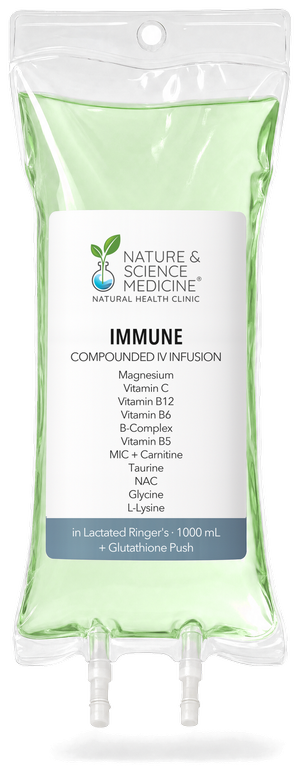
If you want extra support this season, come see us for an Immune IV at our Encinitas clinic.
Questions about staying well this flu season
How much sleep do you need to avoid getting sick?
Aim for at least seven hours. In a study that exposed people to a cold virus, those who slept less than six hours were about four times more likely to get sick than those who slept more than seven (PMID 26118561).
Does exercise help prevent colds?
In a study of 1,002 adults followed through fall and winter, people who exercised five or more days a week had 43% fewer days with cold symptoms than people who barely exercised (PMID 21041243).
Should you take vitamin D with food?
Take it with your biggest meal. In one study, people whose vitamin D levels were not rising switched to taking it with their largest meal, and their levels climbed by about half in two to three months (PMID 20200983). A review of 25 trials also found daily vitamin D lowered the risk of respiratory infections, most of all in people who started low (PMID 28202713).
Does vitamin C shorten a cold?
Taken regularly, it can. A large Cochrane review found people who took vitamin C every day had colds that were about 8% shorter in adults and 14% shorter in children (PMID 23440782).
Is there something you want tips on, like sleep, stress or digestion? Email us at info@nsmedicine.com and we’ll do our best to cover it in a future post.
In health,
The Nature & Science Medicine Team
Medically reviewed by Dr. Nikodemas McNulty, ND
This post is for education and isn’t a substitute for medical advice. Talk with your provider before starting any new therapy.